Case Study · 03 · Sports Ecosystem
Veo. From a rig to an ecosystem.
A behaviour-driven redesign of Veo Go, turning a single-use recording rig into a modular platform for coaches, athletes, and content creators, delivered as a concept catalogue + working app prototype.
The process
From a brief on hardware tweaks, to a platform pivot.
The client asked for hardware fixes. We reframed the brief around behaviour, and the answer came back bigger.
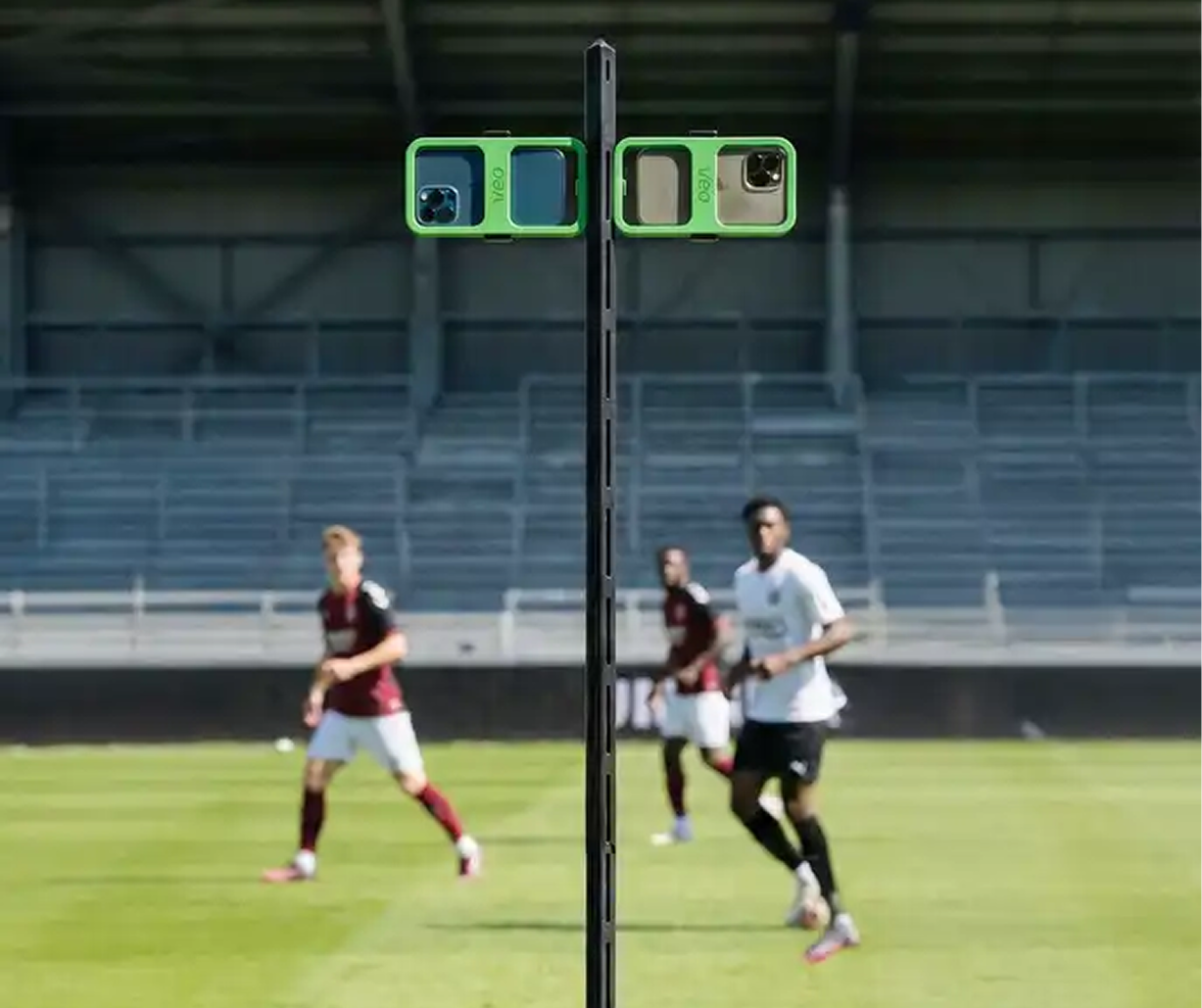
A product that worked, but for whom, exactly?
Veo Go was live and functional, but customer feedback pointed to real friction: setup took too long, the dual-phone case was bulky, and the app offered no guidance.
The client brief focused on hardware tweaks. As HCI students, we asked a bigger question: was the system designed around how people actually use it?
The product's real value was its AI software. The hardware was holding it back.
Eight competitors mapped, one client workshop, one gap found.
We analysed eight competing systems across pricing, automation, and target segments.
In parallel, we ran a co-creative workshop with Veo, structured around celebrity personas and interaction journey maps, to surface shared pain points directly with the team.
Veo Go occupied a unique position no competitor filled, but a fixed product couldn't hold it. A deep dive into GoPro's accessory ecosystem planted the seed: stop competing as a product, become a platform.
The GoPro model reframed the entire project from "better rig" to "open ecosystem."
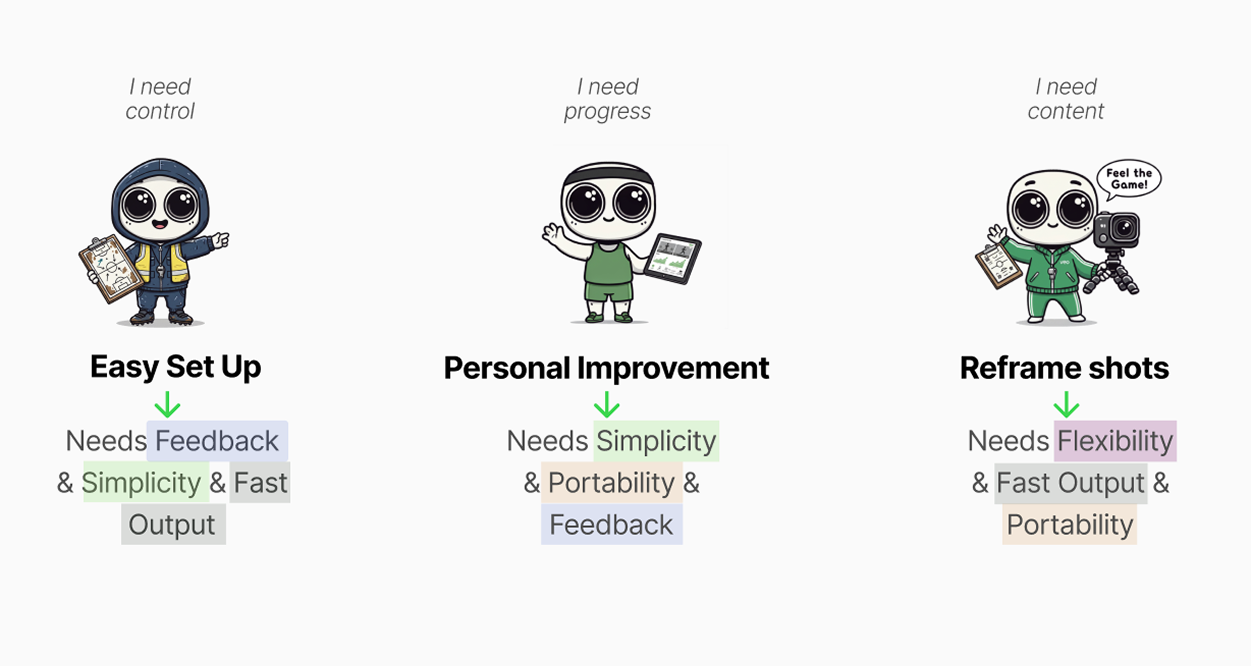
Personas were the wrong lens. Behaviours were the right one.
Using workshop insights, we shifted from demographic personas to observable behaviour patterns.
Five archetypes emerged, then consolidated into three, each with distinct needs across the before/during/after recording journey:
"Who is the user?" became "how does this person behave in this context?" One system, multiple roles.
When the ideas clustered, the ecosystem appeared.
After open ideation and C-box prioritisation, something clicked: the surviving ideas weren't separate features, they were layers of the same modular system.
I sketched the first ecosystem layout and app user flows, and tested the existing rig in real volleyball training sessions to ground decisions in actual friction.
A squared tripod profile replaced the round one, making the full modular extension system possible with no extra clamps.
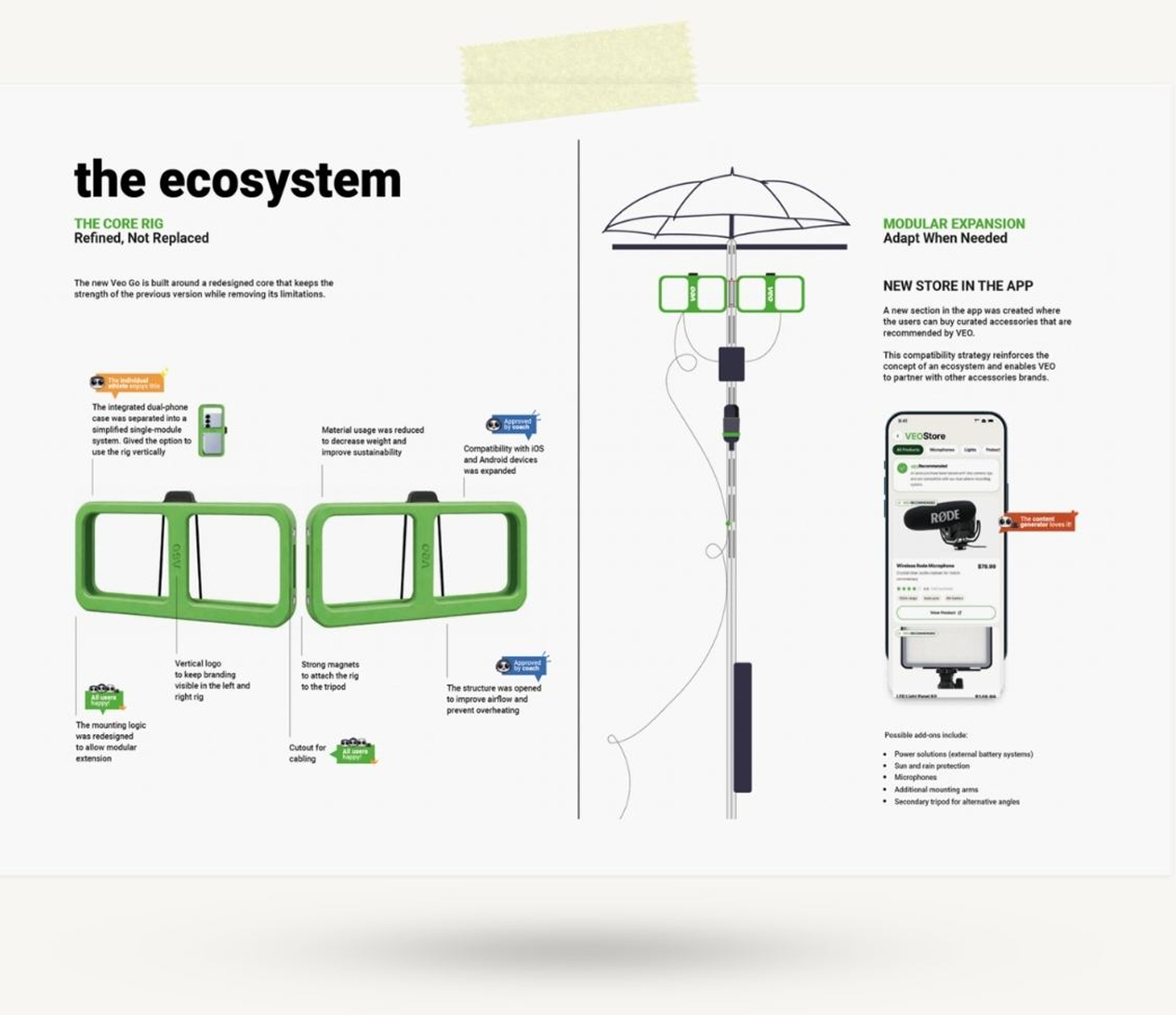
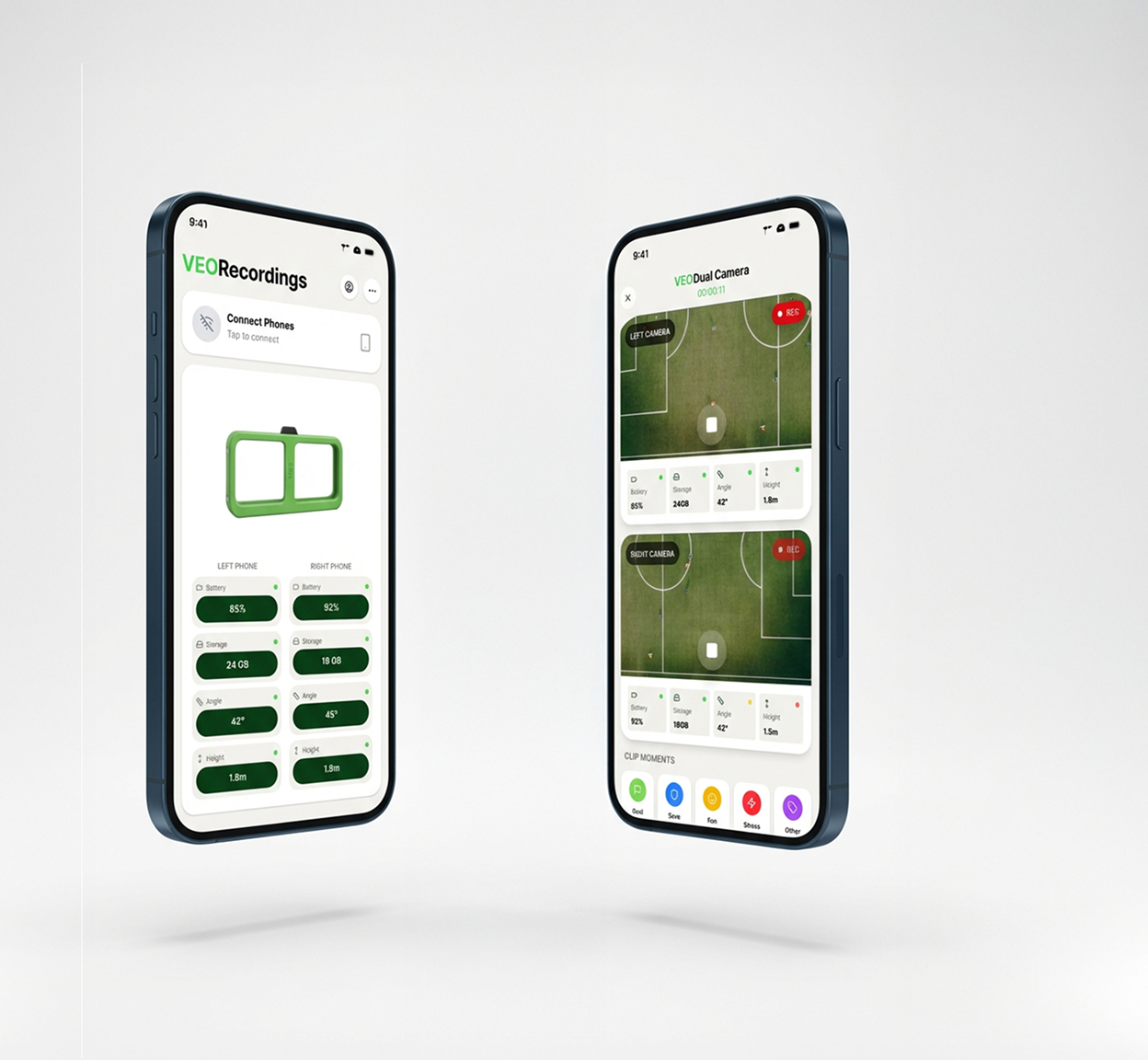
20 screens, one refined module, one catalogue that told the whole story.
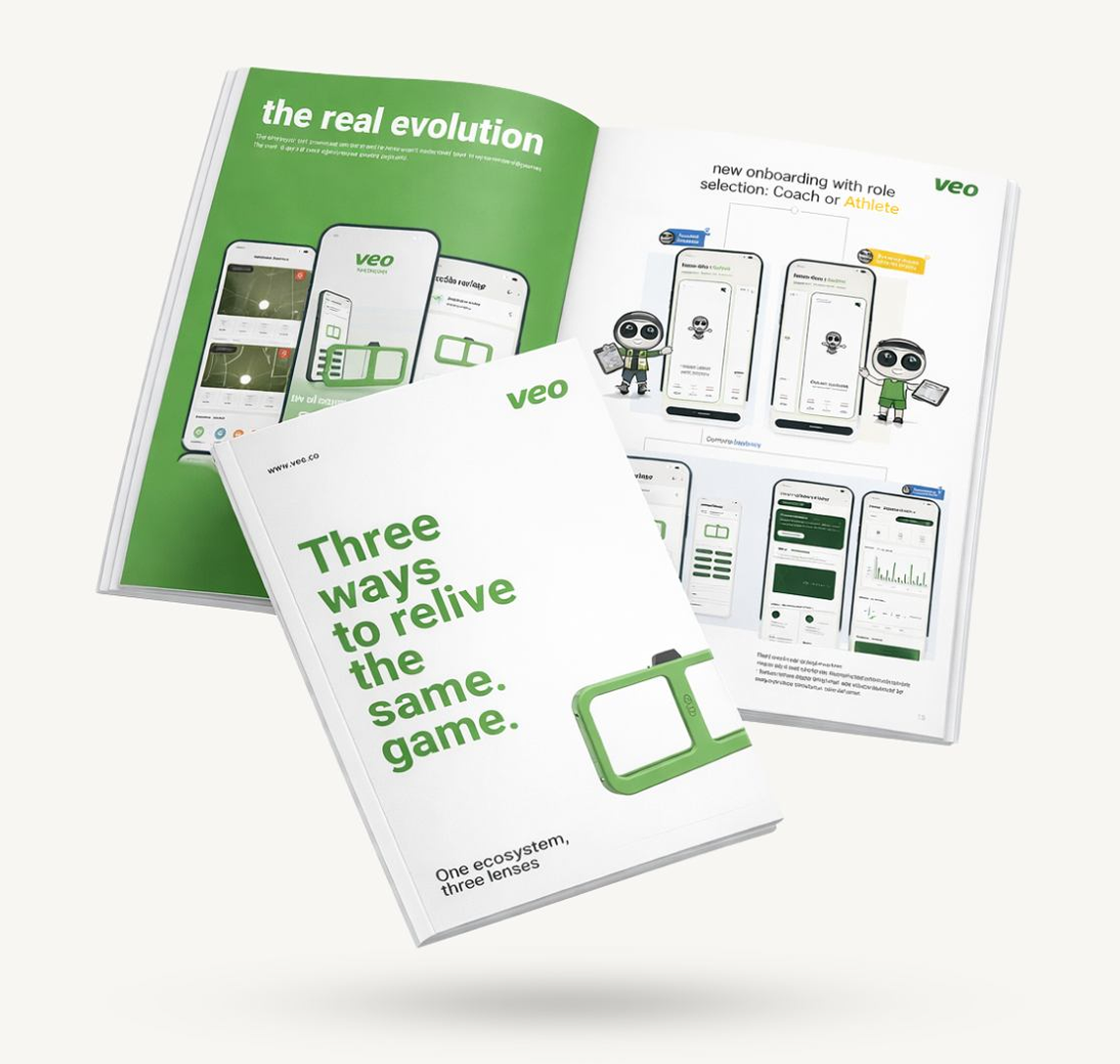
We designed the full app prototype: role onboarding, sensor-guided setup, live recording with clip-tagging, analytics dashboard, Content Generator, and VEO Store.
We also produced the new hardware sketches, module mock-ups, and the entire concept catalogue in Veo's design language.
Real-time setup feedback via existing phone sensors. No added hardware required.
One ecosystem. Three behaviours. Handed to a real client.
The concept catalogue, live app demo, and final presentation were delivered to Veo Technologies.
The redesign addressed all brief requirements while opening Android compatibility (70% of the market), a new accessory revenue stream, and a community layer that repositions Veo Go as a sport platform.
Veo Go shifts from a recording device to an adaptive ecosystem, built to grow with the sport.
Next case study